
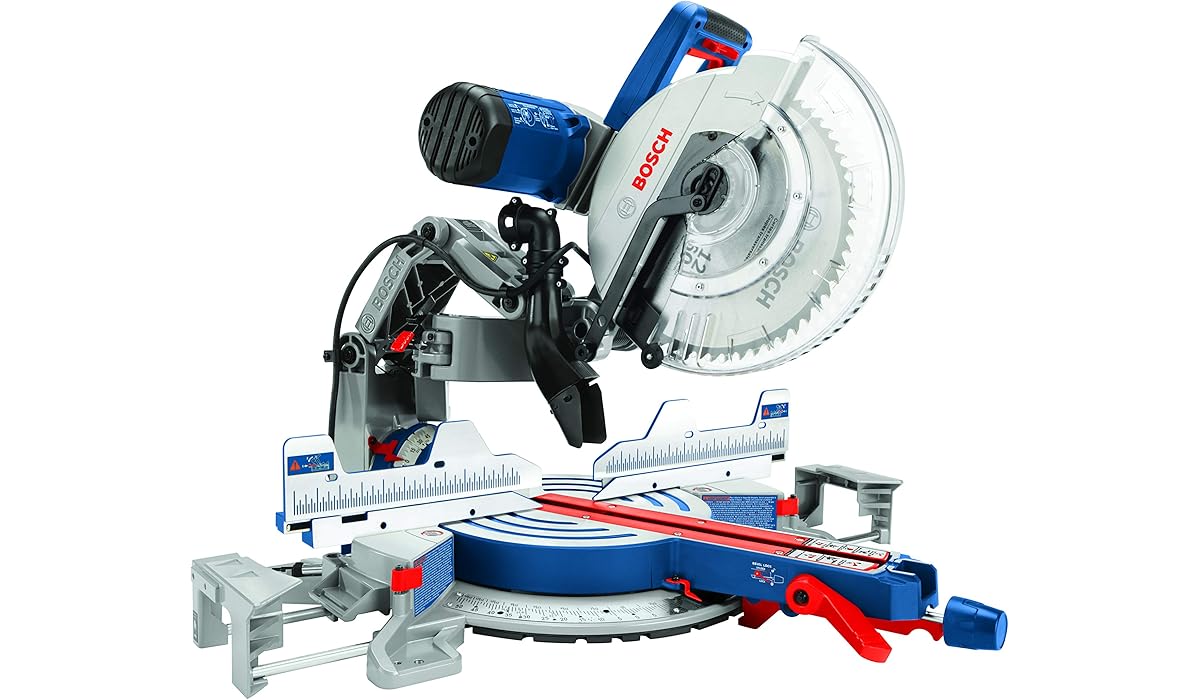
Miter saws are very accurate and efficient power tools. That makes them ideal for professional woodworkers and DIYers. They come in a variety of models.
Also, they have either single bevel or double bevel for making various applications. And if you head out to a local hardware store, you’re going to decide which type to buy for your applications.
In this review, we’re going to walk you through single bevel vs double bevel miter saw. You will then know which type to choose based on the project at hand.
One thing you can bet on is that they’re ideal for different woodcutting operations. And knowing what they’re about will help you make an informed decision.
Single Bevel Miter Saw
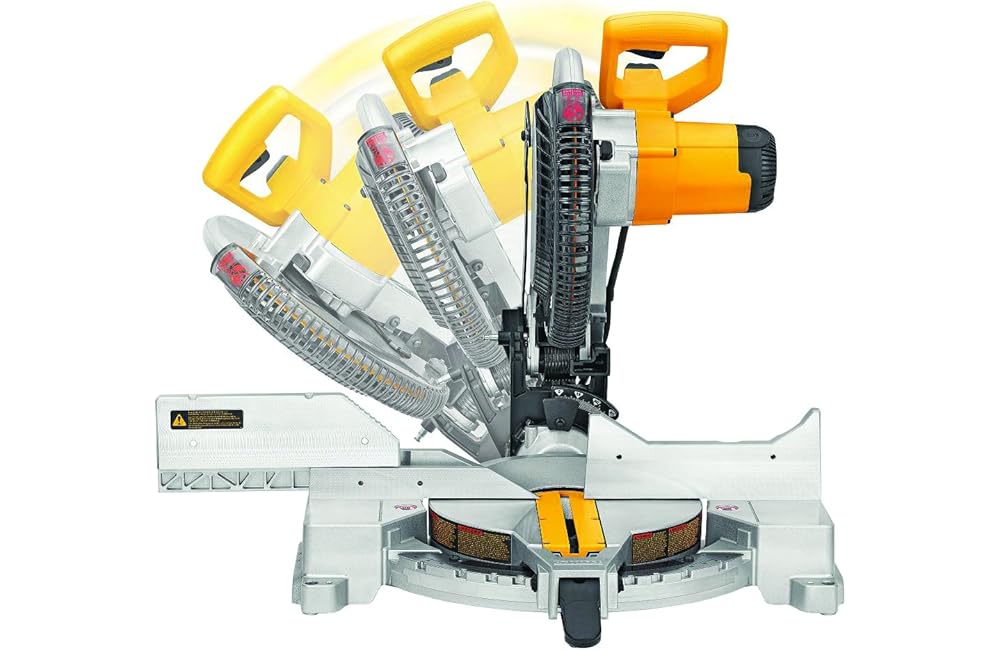
These miter saws are ideal for entry-level woodworkers. They perform with excellent efficiency and accuracy, just like their double or dual bevel miter saw brothers.
From the name, these miter saws can only bevel in one direction. Mostly, they bevel to your left if you’re facing the tool.
But you can be sure to find other models that pivot to your right. If you want to make angled cuts in two planes, they’re a sweet deal. They’re ideal for making picture frames, trims, and crown modeling.
These miter saws can make crosscuts, miter cuts, bevel cuts, and compound cuts.
You will only make bevel cuts and miter cuts in one direction. But generally, they’re efficient and accurate. The only issue is that you will spend more time and energy working on larger projects. And that’s true if you have to make bevel cuts on both sides of a workpiece.
Making bevel cuts on both sides of a workpiece means flipping the workpiece over. Most of the time, you will find these miter saws ideal for home improvement. For more professional woodworks, you might want to consider double bevel miter saws.
Their ease of use makes them a great option for entry-level woodworkers. Also, they’re more portable and easy to move around. Not bad for a starting woodworker, huh?
- Easy to use.
- Lightweight and portable.
- An excellent choice for domestic use.
- They’re more affordable compare to the double bevel unit.
- Efficient and accurate.
- They take more time to make bevel cuts on both sides of a workpiece.
- You will spend more energy.
- Flipping the workpiece might affect the accuracy of the cut.
Double Bevel Miter Saw

You already know that single bevel miter saws tilt in one direction. But double bevel miter saws tilt in both directions. They can tilt to the right or left. They are ideal for professional woodworkers for a few reasons. First, they’re more accurate and efficient than single bevel units.
They exclude the need to flip workpieces over when making bevel cuts on both sides. This improves the accuracy of the cutting operation. You will not have to reset the angles while making such cuts. Also, you will complete your project faster and use less effort.
As such, double bevel units are for professionals looking to beat strict deadlines. People looking to take on larger projects can also choose them.
And if you are into fancy crown moldings and trim workpieces, double bevel miter saws are the tools to hunt for. They produce uniform cuts that improve the neatness of the final project.
Dual bevel miter saw come with a few advantages that single bevel units don’t have. And you will spend a few extra bucks to buy them. But they are worth every single penny since they work faster and need less effort to operate.
Also, they are heavier than their single bevel counterparts. But it’s not a weight that you can’t handle. That makes them have a downside on their portability.
- Cut workpieces faster.
- You will use less effort.
- They offer more complex cuts to meet dynamic needs.
- More accurate with their uniform cuts.
- They exclude flipping of workpieces over.
- They are a bit expensive.
- Heavier and less portable.
Single Bevel Vs Double Bevel Miter Saw
Single bevel miter saws and double bevel units share the same features. But they also have factors that differentiate them. Here, we will look at their similarities and differences. But first, let’s take a look at what they share in common.
Similar features between single and double bevel miter saws
Similarities exist between the two miter saw types. They are similar to each other since they:
- Both cut wood materials at the same depth.
- Both pivot on an axis. They make excellent cuts at the right angle because of this.
- Both make bevel and miter cuts.
- Both cut the same materials.

Difference between single and double bevel miter saws
Looking at the two types of miter saws, you will find a few differences. These differences are in the form of:
Speed Of The Project
Both types of miter saws (single and dual beveled units) will complete the project. But double bevel miter saws complete projects faster.
And you will spend less energy while using them as compared to single bevel miter saws.
They permit you to make bevel cuts on both sides without flipping the workpiece. This saves time hence, they complete the project faster.
Also, exclusion of the flipping means you save on your effort. They’re ideal for making matching compound cuts on crown molding.
Accuracy And Precision Of The Cuts
These miter saw types make excellent compound cuts. But they differ in accuracy and precision.
Double bevel miter saws are more accurate and precise than single bevel types. This quality makes them perfect for cutting premium-quality woods.
And professionals can maximize their skills while using them. You can make compound cuts on workpieces without flipping them over.
Single bevel units will force you to flip workpieces over during such cuts. And you will have to reset and reposition the workpiece. As a result, you will tamper with accuracy and precision.
Cutting Angle
Single bevel miter saws only let you cut bevels in one direction. You can make the bevel cuts either to the left or right. But with double bevel units, you can cut a bevel in two directions and make bevel cuts both to the right and left.
Pivoting Of Unit
Single bevel miter saws pivot only to the left. They pivot to the left if you’re facing them. They also cannot pivot beyond 90 degrees in the other direction.
Double bevel miter saws pivot to the left and right. They give you more room to make bevel cuts in both directions. This makes them the winner among the two types.
Conclusion
Knowing the differences between the two miter saw types is essential. It will give you an insight into which type to choose. You can always find high-quality miter saw units from a hardware store or online retailer. You only need to make the right decision.
Fortunately, you already know how to make your selection. Invest in a high-quality miter saw unit and experience prolonged usage. Here, we have looked at two types of miter saws — single bevel units and double bevel units.
You can choose single bevel miter saws if:
- You are beginners and amateur woodworker.
- You want an easy-to-use miter saw.
- Working on a tight budget.
- More portable options.
And choose double bevel miter saws if:
- You are a professional woodworker or enthusiast DIYer.
- Complete projects faster.
- You want to spend less effort on your project.
- More accurate and precise cuts.
The idea here is to look for what your projects need. If you’re a homeowner and looking forward to the right miter saw for home use. A single bevel type will serve you well.
But for a professional looking to complete work faster, double bevel type is for you. Take a moment to choose what you need.


![9 Best Pole Saws of 2023 [Ultimate Guide]](https://handykeen.b-cdn.net/wp-content/uploads/2021/03/best-pole-saw-300x200.jpg "9 Best Pole Saws of 2023 [Ultimate Guide]")