Dimensional lumber is a uniquely fascinating material. Its long, wide shape makes it an ideal layout medium in projects with space constraints, and its versatility makes it suitable for many different purposes.
A 2×4 is the most common piece of wood used in construction. Typical lengths range from 8 feet to 12 feet.
In most residential homes, you can use it to frame a residence, but it is also ubiquitous in other construction activities.
But how much weight can a 2×4 hold? To answer this question, continue reading as we break down each factor that will help determine the maximum weight a 2×4 can support.
Table of Contents
- What Is A 2×4 Lumber?
- How Much Weight Can a 2×4 hold?
- How Much Weight Can a 2×4 Hold Vertically?
- How Much Weight Can A 2×4 Hold Horizontally?
- How Much Weight Can a 2×4 Hold on Edge?
- Factors That Affect The Amount Of Weight A 2×4 Can Hold
- Compressive Strength of a 2×4
- Does Age Affect the Strength of a 2×4?
- Breaking Strength of a 2×4?
- How Much Weight Can a 2×4 Withstand Perpendicularly?
- How Much Weight Can a Pressure-Treated 2×4 Carry?
- Is a 2×4 Stronger on the Edge or Laying Flat?
- Does a 2×4 Loose Its Strength Over Time?
- Are Two 2x4s as Strong as one 4×4?
- Conclusion
What Is A 2×4 Lumber?
A 2×4 lumber is a rectangular piece of timber that is 1½ inches thick and 3½ inches wide.
This dimension’s lumber is usually placed in the middle of a frame to help support and strengthen the structure. A rough-cut 2×4 piece of lumber is about 2 inches thick and about 4 inches wide.
But, it loses about ¼ to ½ of its thickness after milling to a more polished and finished look.
You can also cut this lumber into lengths of 8 feet, 10 feet, and 12 feet. Its length can, however, be adjusted to suit your needs.
How Much Weight Can a 2×4 hold?
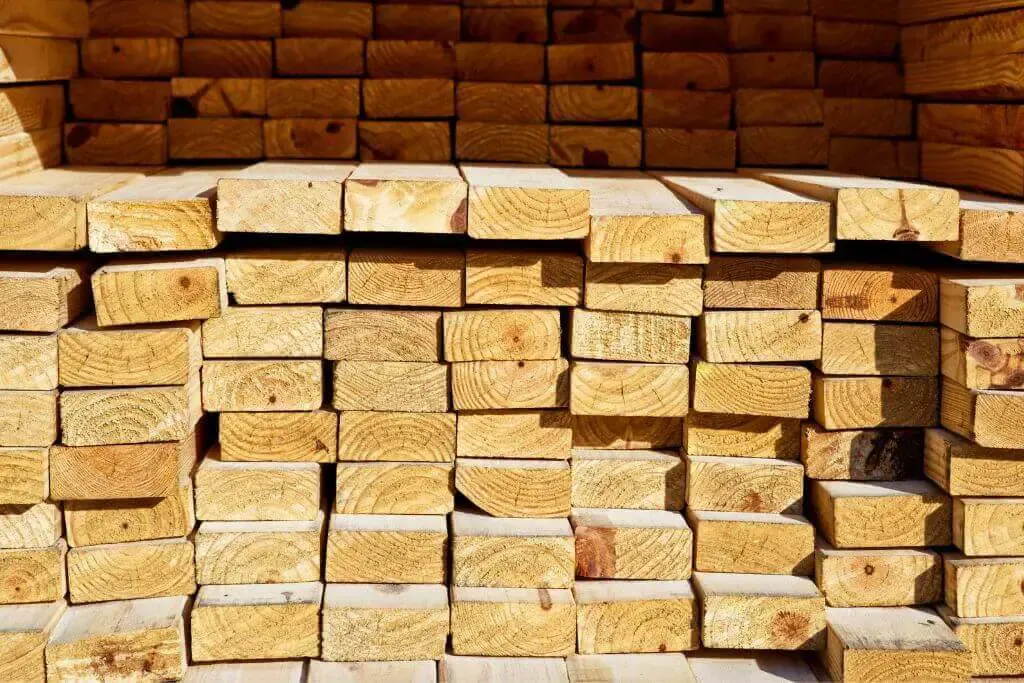
A 2×4 is a ubiquitous piece of lumber used to secure the roof of a shed or house. Due to its versatility, small size, and easy-to-use nature, you can use the 2×4 for many other purposes. But how much weight can a 2×4 hold?
The weight it can hold depends on whether it is vertical or horizontal. This lumber can hold up to 1,000 pounds in an upright position.
On the other hand, when in a horizontal position, it can hold up to 300 pounds without sagging.
Depending on the species of the wood, the 2×4 can hold various amounts of weight. Regarding holding weights, it is essential to note that the amount it can hold is also affected by several factors discussed in this article.
How Much Weight Can a 2×4 Hold Vertically?
When positioned vertically, a 2×4 can hold a considerable amount of weight. It holds more weight than when in a horizontal position. As stated earlier, the lumber can hold up to 1000 pounds vertically.
This characteristic makes it ideal for securing the roof and framing a house’s exterior and interior walls.
The weight it can hold vertically can also be affected by the spacing when attaching to other supports.
With a spacing of 16 inches, 2x4s can hold from 10,000 – 20,000 pounds. This is enough to maintain the position of a house. Depending on the weight, you should adjust the spacing to prevent the lumber from sagging.
How Much Weight Can A 2×4 Hold Horizontally?
The 2×4 is prone to bend when placed horizontally due to its weight pressure. General, it can hold about 20 – 40 pounds.
The bending strength of the 2×4 depends on several factors. These factors include the type of lumber and weight distribution.
It is advisable to load the lumber with weight enough to secure the frame without causing any bending. It is a matter of safety and a process to ensure the wood does not sag or break.
The two most common types of projects using 2×4 lumber are flooring and roof structures. Flooring structures using 2×4 lumber include joists, beams, and rafters on the floor of the house or building.
For the roof structure, 2×4 lumber is used as support for the trusses or rafters.
Still, when you evenly distribute the weight, the 2×4 can hold considerable weight in the horizontal position.
When joists, beams, and rafters are attached to the support system of a house or building, their weight is distributed evenly. And this forces the support system to hold a considerable amount of weight.
On the other hand, when the weight is not evenly distributed and concentrated on only one side of the support system, it can cause sagging.
How Much Weight Can a 2×4 Hold on Edge?
The 2×4 is capable of holding weight on edge about 300 pounds if evenly distribute weight.
However, its support system must have sufficient strength to withstand the weight. The lumber is usually placed on an angle that allows more weight distribution.
When positioned on an edge, the angle of the lumber can affect how much weight it can hold.
For example, when used in a truss or rafter system, the angle should be between 25 and 47 degrees for the maximum weight to be placed on this support system.
This explains why headers are so important when supporting a roof. They help distribute the roof’s weight evenly on both sides of the support system. In a wooden house, floors and ceilings are supported using 2×4 lumber.
Factors That Affect The Amount Of Weight A 2×4 Can Hold
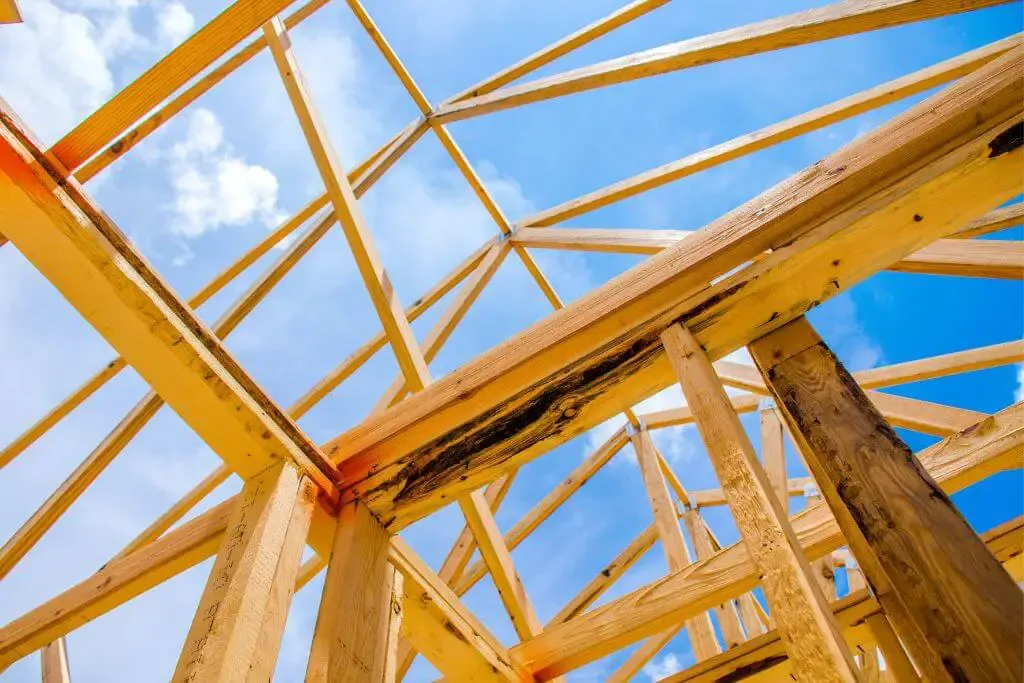
Many factors influence the amount of weight a 2×4 can hold. However, the main ones are discussed here.
1. Type of lumber
Different species of wood have different strengths for holding weight. Hardwoods are strong woods that can easily bear heavy loads.
Softwoods, on the other hand, are weak and susceptible to breaking and bending under heavy weight. Different types have different densities and weights.
The denser the wood, the stronger it will be. Dense woods include oak, mahogany, and teak. On the other hand, softwoods include pine, cedar, and fir. Different species of wood are ideal for different types of uses.
For example, a 2×4 made from softwood is only recommended for holding a heavy load if other beams simultaneously support it.
Different types of lumber have various load capacities, hence the need to consider the wood used.
2. Density
Density plays a considerable role in determining the actual weight a 2×4 can hold. It is important to note that the more density a lumber has, the more weight it can hold.
The denser the wood, the stronger it will be. But it is also important to note that not all lumber has a uniform density level hence the need to consider this factor carefully.
- Density of Softwood
Softwoods have low-density levels. Therefore, they can only hold up to a certain weight without bending or breaking down.
- Density of Hardwoods
Hardwoods have high-density levels. They can easily hold heavy loads without sagging, bending, or breaking down. 2x4s made from these woods can hold up to a high amount of weight but with little or no risk of breaking.
3. Type of load
Woods have different types of loads they can bear. Each type of load has its weight capacity. Depending on the load it carries, there is a limit to the weight a 2×4 can hold.
- Dead Load
Dead load refers to the weight that can result from weight added to a load structure. It is also referred to as permanent or static weight.
This load is common in residential homes. It includes drywall and the weight of the truss. For this reason, it is crucial to consider the type of load that the lumber will support.
- Live Load
On the other hand, live load refers to an additional weight that is not permanent. This load is common in commercial buildings and has considerable weight.
The live load includes the weight of people passing through a building, the weight that increases due to snowfall, and other movable partitions within the structure.
4. Grade of The Lumber
Woods come in different grades. The grade is the overall quality of a wood product, including the attributes of wood as it grows and is harvested.
It can affect the timber’s uses in a variety of ways. Similar types of wood can have different grades.
Various anomalies can occur during the grading procedures and affect the weight-holding capacity of a 2×4. Factors leading to anomalies include rot, insect damage, and warping.
For instance, mahogany has a high grade; however, an anomaly may occur in the grading process.
This anomaly may reduce the amount of weight mahogany can hold. It is essential to carefully consider the grade of lumber before purchasing it for a construction project.
The quality of a piece of lumber is a measure of its strength and quality and is determined by how it is made.
A good quality piece of lumber is very strong, dense, and tight-grained hence stronger than the other. Suitable grades of lumber are usually made from trees of high quality.
The grade of lumber will determine the weight that it can support. This indicates how many of the tree’s fibres are developed and which remain uncut. For this reason, the quality of lumber affects its capacity to hold weight.
5. Moisture
The moisture content of the wood determines how much weight the wood can hold. Dry wood holds more weight than wood containing a lot of moisture, also known as green.
Lumber heated at extreme temperatures of about 125 degrees to lose moisture sustains more weight than green lumber.
Klin-dried lumber loses between 6 to 16 percent moisture compared to green lumber, which contains 24 to 29 percent moisture. Dry wood is more potent and will hold more weight.
The dry wood is also stiffer and less prone to bending under the pressure of weight. In construction, frames built using green lumber with high moisture content will become stronger with time as it dries out.
6. Span
The span of a beam or a piece of lumber is essential in determining its load capacity. It is the distance between the two endpoints of the beam. Longer spans require more structural design and construction skills.
The span of a beam affects its load capacity. The less span of the lumber will affect the amount of weight it can support. The smaller the span, the more weight it can hold.
Furthermore, the less span of the beam, the less likely it is to be affected by flexure, bowing, or bending.
For example, a beam with a large span may break under pressure since it is more prone to warping. The larger the span, the less stable it becomes because of its size.
Compressive Strength of a 2×4
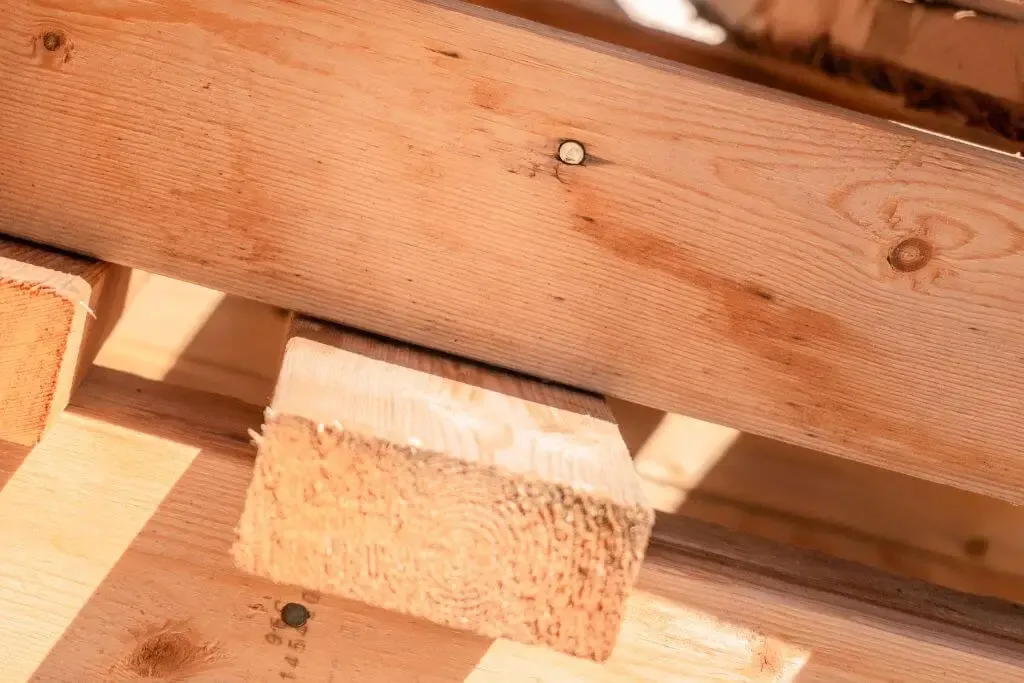
Regarding the strength of a 2×4, there are a few things to consider.
The first is the type of wood. Generally speaking, pine is not as strong as oak.
The second is the grade of the lumber. A lower grade means that the lumber has more knots and other imperfections, which can weaken it.
Assuming you’re talking about standard pine lumber, the answer is that it can vary quite a bit. On average, a 2×4 made from softwood like pine will have a compressive strength of around 1200 psi.
But if you get a higher-quality piece of lumber with fewer knots and defects, its strength could be as high as 3000 psi.
Does Age Affect the Strength of a 2×4?
Age also influences the capacity of a 2×4 to hold weight. The moisture content of the wood is affected by age; hence it affects the strength of a piece of lumber.
Green lumber is weaker than dry, so as it ages, it loses moisture, which makes it stronger. Older pieces of lumber are, therefore, stronger than new ones.
However, dry lumber is exposed to fungus, heavy loads, termites, and extreme conditions, weakening the lumber over time.
These factors weaken the wood and make it weaker, resulting in a lower capacity for holding weight. Therefore, an old lumber weakens over a long period of time.
Breaking Strength of a 2×4?
There are a few things to consider when it comes to the breaking strength of a 2×4.
The type of wood from which the 2×4 is made can make a big difference. Softer woods like pine or fir will have a lower breaking strength than harder woods like oak or maple.
Another factor to consider is the grain of the wood. If the grain is straight, then the 2×4 will be stronger than if the grain is crooked or wavy.
Finally, how dry the wood is will also affect its breaking strength. Wetter wood is weaker than dry wood.
It’s difficult to give an exact number for the breaking strength of a 2×4. However, on average, a 2×4 made from softwood and with a straight grain will have a breaking strength of around 1,000 lbs.
How Much Weight Can a 2×4 Withstand Perpendicularly?
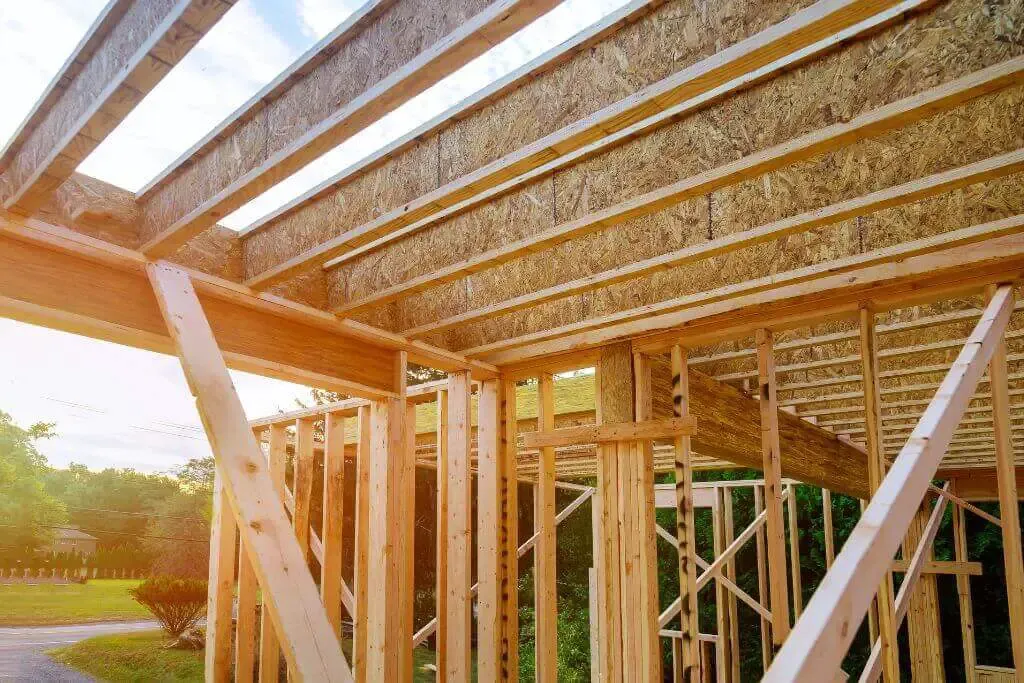
If the 2×4 is properly secured at both ends, it can hold quite a bit of weight perpendicular to its length.
The specific weight will depend on a number of factors, including the type and quality of the lumber, the size of the 2×4, and how it is mounted.
For example, a 2×4 made from high-quality lumber that is 12 feet long can support up to 1,000 lbs when properly secured.
However, a shorter 2×4 made from lower-quality lumber may only be able to support 300 lbs. It is always best to focus on caution when determining how much weight a 2×4 can hold.
How Much Weight Can a Pressure-Treated 2×4 Carry?
A pressure-treated 2×4 can hold up to about 485 lbs. This includes the weight of the lumber itself plus the live weight applied to it, such as from a person or object.
The 2×4 must be appropriately attached to a support structure, such as a wall or beam, to hold this weight.
Is a 2×4 Stronger on the Edge or Laying Flat?
The strength of a 2×4 will depend on a number of factors, including the type of wood, the quality of the lumber, and how it is used.
However, a 2×4 is generally stronger on edge than lying flat. This is because the grain of the wood runs parallel to the length of the 2×4, making it more resistant to splitting and breaking.
Additionally, the edge of a 2×4 is typically stronger than the middle, as the wood is more compressed at the edges.
Does a 2×4 Loose Its Strength Over Time?
A 2×4 gets weaker over time since it is constantly subject to forces that compress and bend it. These forces cause the wood fibers to break down, which reduces the strength of the 2×4.
Also, the 2×4 is susceptible to rot and insect damage, further weakening it.
Are Two 2x4s as Strong as one 4×4?
In general, two 2x4s are not as strong as a 4×4. The extra width and thickness of the 4×4 give it more strength. However, there are some situations where two 2x4s might be just as strong as a 4×4.
For example, if you’re using lighter-weight lumber or if the 2x4s are cut in a certain way, such as with notches for added strength, they can be just as strong as a 4×4.
If you’re trying to decide whether to use two 2x4s or a 4×4 for your project, it’s best to consult an expert or do some research to determine which option would be best for your specific situation.
Conclusion
In summary, the quality of lumber and the grade of the wood determine its weight capacity. 2x4s are among the most commonly used framing lumber in residential construction.
Their primary purpose is to support beams, studs, walls, and other parts of buildings.
Homeowners should work with good quality lumber since it is necessary to hold massive amounts of weight.
To ensure you get high-quality lumber that can support a lot of weight, find out what grade the lumber is; remember, the higher the quality, the more it will withstand a load.


![9 Best Pole Saws of 2023 [Ultimate Guide]](https://handykeen.b-cdn.net/wp-content/uploads/2021/03/best-pole-saw-300x200.jpg "9 Best Pole Saws of 2023 [Ultimate Guide]")