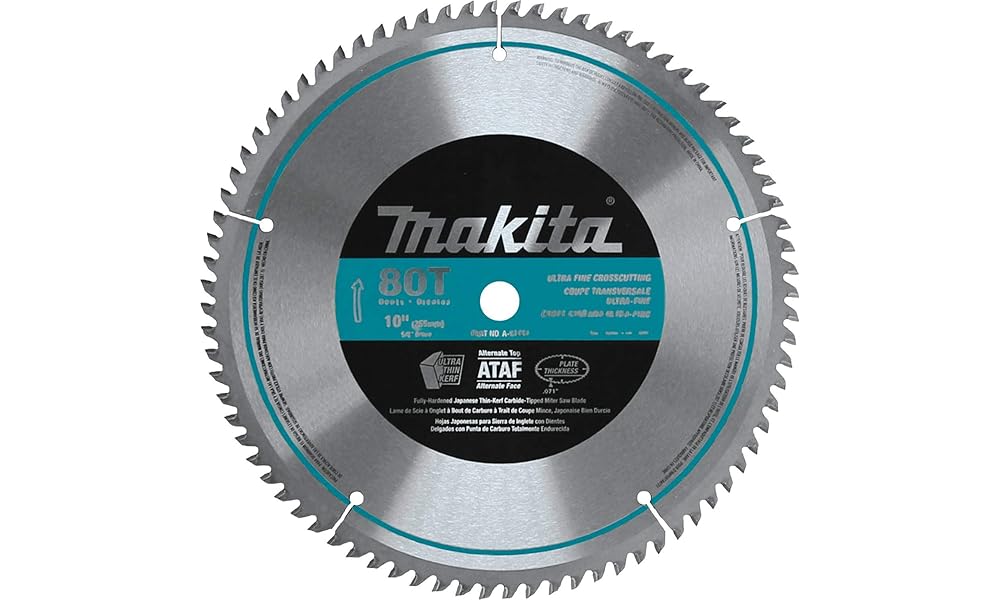

Yes, a miter saw will cut tile, but only with a diamond blade rated for tile, and only for a handful of cuts.
The catch is the blade already on your saw. A carbide wood blade is not hard enough or shaped to grind through ceramic, and forcing it can crack the tile, bind the blade or shatter it.
So can you cut tile with a miter saw comes down to two things: what your blade is rated for, and what you are cutting. Change either and the answer flips.
Table of Contents
- Key Takeaways
- Yes, But Only With A Blade Your Saw Can Spin
- Which Diamond Blade Actually Fits A Miter Saw
- Which Tile Types A Miter Saw Can Handle
- The Silica Dust Problem Behind Every Dry Cut
- What Tile Dust Does To Your Miter Saw
- Diamond Blade Vs Rental Vs A Cheap Wet Saw
- The One Tile Job Your Miter Saw Is Built For
- How To Cut Tile With A Miter Saw Without Wrecking It
- FAQs
- Bottom Line
Key Takeaways
- Yes, with a diamond blade rated above your saw’s no-load speed. A 10-inch saw spins about 5,000 RPM, a 12-inch about 4,000, and a stock wood blade never works.
- Continuous rim cuts cleanest on ceramic and porcelain. Turbo and segmented rims cut faster and chip more.
- Vinyl plank cuts fine on a stock fine-tooth blade. Ceramic, porcelain and stone do not.
- Dry cutting throws silica dust past the legal exposure limit, so water and a respirator are not optional.
- For a whole room, a rented or cheap benchtop wet saw wins on edge quality and dust.
Yes, But Only With A Blade Your Saw Can Spin

One number decides whether a diamond blade belongs on your saw, and most people never go looking for it.
The blade’s rated maximum revolutions per minute (RPM) has to meet or beat your saw’s no-load speed. Diamond blades built for miter saws usually carry ratings from 6,000 to 8,700 RPM and a 5/8-inch arbor, which clears a standard saw comfortably.
The bigger saw is not the faster one. A 12-inch miter saw spins around 4,000 RPM no-load against 5,000 on a 10-inch, because the larger blade radius costs speed, a gap our 10-inch versus 12-inch miter saw comparison digs into.
Shopping for a miter saw tile blade starts and ends with that spec plate. Four checks before anything goes on the arbor:
- Arbor size, 5/8-inch on standard miter saws
- Blade diameter matching your saw, 10-inch or 12-inch
- Maximum RPM at or above the no-load speed printed on the saw
- Crosscut capacity wide enough to reach across your tile
That last check disqualifies more saws than the RPM does. A non-sliding saw only crosscuts about 6 inches, so a 12 by 12 floor tile needs a sliding saw, and the crosscut capacity line in your manual settles it before you spend a dollar on a blade.
A standard carbide wood blade never qualifies. It cannot grind ceramic, porcelain or stone, and forcing it invites cracking, binding, kickback or a blade coming apart at head height.
Which Diamond Blade Actually Fits A Miter Saw
Most 10-inch diamond blades are sold as wet saw blades, so the box rarely says miter saw. You read the spec sheet yourself.
| Blade Type | Fits A Miter Saw? | Best Tile Types | Approx Price | Key Spec To Check |
|---|---|---|---|---|
| Continuous Rim Diamond | Yes, if RPM clears your saw | Ceramic, porcelain, glazed edges | About $9 to $50 | 5/8-inch arbor, dry rating confirmed |
| Turbo Rim Diamond | Yes, same RPM check | Natural stone, thick material | Varies by brand | Rougher edge, more chip risk |
| Segmented Rim Diamond | Technically, but wrong tool | Masonry materials that belong on a grinder or masonry saw | Varies by brand | Fastest, roughest, not a finish blade |
| Standard Wood Carbide | No | None | Already on your saw | Cracks, binds or shatters |
| Non-Ferrous Metal | Yes | Aluminum and brass trim, never tile | Varies by brand | Matched to the trim |
Rim Style Decides The Chipping
An unbroken rim grinds instead of tearing, which is what saves the glaze. Turbo rim cuts faster and suits stone. Segmented rim belongs on masonry.
Read The Dry Rating, Not The Package Front
DEWALT’s 10-inch continuous rim blades run around $50 and QEP’s from about $9 to $37, though most are sold for wet cutting.
Confirm the listing says dry cutting, then check its RPM ceiling.
Which Tile Types A Miter Saw Can Handle
One of these four materials cuts cleanly on the blade already in your saw. The other three chip, crack or eat your afternoon.
Ceramic Tile
The easiest of the fired tiles. Its softer body chips less, so you can cut almost to your line where porcelain needs extra finishing margin. It is why installers brace for porcelain and shrug at ceramic.
Porcelain Tile
Doable, and the hardest case here. Porcelain absorbs under 0.5 percent of its weight in water against 0.5 percent or more for ceramic, and that denser, higher fired body is what makes it brittle at the glaze line, as This Old House spells out.
Most porcelain rates 5 on the Porcelain Enamel Institute (PEI) scale against 1 to 4 for ceramic, but that is a hardness and durability rating, not a cutting guide. Feed slowly and leave margin.
Natural Stone
Switch to a turbo rim. Stone is thick and abrasive enough to bog a continuous rim down, and the tradeoff is a rougher edge that needs a diamond hand pad.
Vinyl Plank And LVT
This one genuinely works on a stock saw. Luxury vinyl tile (LVT) is layered PVC and wood composite rather than fired clay, so a standard high-tooth-count carbide blade cuts it cleanly. No diamond blade, no water, no silica.
The Silica Dust Problem Behind Every Dry Cut

Dry cutting tile can put up to 440 micrograms of respirable crystalline silica into a cubic meter of air. OSHA’s silica rule for construction, 29 CFR 1926.1153, caps exposure at 50 micrograms per cubic meter averaged over a work shift.
At the dusty end, that is nearly nine times the legal limit from one afternoon of cuts.
A miter saw is the worst offender for one plain reason: no water. Stationary tile saws sit in a category that expects water delivered right at the blade, and your chop saw has none of that plumbing.
A paper dust mask does nothing here. An N95 filtering facepiece is the floor, and a half-face respirator with P100 filters is the better call, because silicosis does not heal.
The National Institute for Occupational Safety and Health (NIOSH) guide to respirators for construction dust sorts out the filter classes.
Then control the dust itself. Cut outdoors, wet the cut line with a spray bottle or a slow drip, and run a shop vacuum with a fine dust filter at the saw.
Mist the tile, not the saw. The motor, switch and cord are not sealed for wet use, so keep water away from the vents and trigger.
What Tile Dust Does To Your Miter Saw

Every forum thread ends with somebody warning that you will ruin your saw. Almost nobody explains how.
Cutting tile with a miter saw feeds abrasive mineral grit straight into it. Wood chips blow clear of a saw and tile dust does not, so it packs into the pivot, the slide rails and the motor vents.
Heat is the other half. A dry diamond blade turning 4,000 to 5,000 RPM runs hotter than the same cut on a wet saw at 2,850 to 3,500 RPM, because nothing carries heat off the edge.
Tile is not a material miter saw makers list as supported, so read your manual before the diamond blade goes on, and blow the saw out with compressed air after. That is why a handful of cuts is fine and a whole floor is not.
Diamond Blade Vs Rental Vs A Cheap Wet Saw
Renting can cost more than buying. A full day on a rented wet saw runs about what a discounted benchtop saw costs outright.
| Method | Approx Cost | Best For | Edge Quality | Dust Control |
|---|---|---|---|---|
| Miter Saw Plus Diamond Blade | $9 to $50 for the blade | A few straight cuts, saw you own | Good with continuous rim, chippy if rushed | None, add water and respirator |
| Angle Grinder Plus Diamond Blade | Varies by brand | Miters, curves, installed tile | Rough, needs a polishing pad | None, dry unless you add water |
| Wet Saw Rental | About $20 for 4 hours, $40 to $60 per day | One room, one weekend | Best, 1/32 inch on pro saws | Integrated water |
| Entry-Level Wet Saw Purchase | $23 to $120 discounted | Multi day or repeat projects | Very good, fence and miter gauge | Integrated water |
Day rates vary by store, so call your local tool counter before planning around a number.
A few cuts, buy the blade. A whole room, rent or buy the wet saw, and our guide to cutting tile without a wet saw covers the other routes.
Do not chase the cheapest saw on the shelf. Underpowered motors and wobbly fences destroy tile faster than they save dollars.
The One Tile Job Your Miter Saw Is Built For
There is one part of a tile job where the miter saw is the correct tool, and the manufacturer says so in writing.
Schluter puts its aluminum and brass edge profiles on a chop saw or miter saw fitted with a non-ferrous blade, then has you deburr the cut end with a file. Stainless steel profiles are a different job, cut with an angle grinder or a band saw instead.
Our chop saw versus miter saw breakdown sorts out which of those two to reach for.
The technique is two beats. Face of the profile up against the backstop, and the piece clamped so it cannot shift under the blade.
This is cutting the trim, not the tile. Different blade, different material, no silica.
How To Cut Tile With A Miter Saw Without Wrecking It

Two mistakes ruin more tile than everything else combined: rushing the feed and holding the piece by hand.
- Check the blade’s arbor and maximum RPM against your saw’s no-load speed.
- Goggles, hearing protection and a respirator on before the saw is plugged in.
- Mark the cut line with a pencil or scribe.
- Set and lock the miter and bevel angles.
- Clamp the tile. Lateral pressure walks an unclamped piece off the line.
- Wet the cut line with a spray bottle or slow drip to suppress dust and cool the blade. Mist the tile only, never the saw’s vents, trigger or cord.
- Lower the blade slowly with light, steady pressure. Rushing loads the motor and chips glaze.
- Let the blade stop before lifting the piece out, then dress the edge with a diamond pad or tile file.
Support long pieces at the far end. A drooping tile makes the cut wander and the last inch chip.
On a mitered edge, leave about 1/32 inch of tile, roughly a millimeter, for a finishing pass. That margin keeps the glaze from flaking.
FAQs
What Blade Do You Need To Cut Tile With A Miter Saw?
A continuous rim diamond blade with a 5/8-inch arbor and a maximum RPM at or above your saw’s no-load speed. Continuous rim gives the cleanest edge on glazed tile, turbo rim suits stone, and the listing has to confirm a dry rating.
Can You Cut Porcelain Tile With A Miter Saw?
Yes, with a continuous rim diamond blade, though porcelain is the hardest case. Its denser body chips at the glaze line, so feed slowly and leave extra material for a finishing pass with a diamond hand pad.
Can You Cut Tile With A Regular Miter Saw Blade?
No. A carbide wood blade is not hard enough or shaped to grind through ceramic, porcelain or stone. Forcing it can crack the tile, bind the blade, cause kickback or break the blade apart while it spins.
Do You Need Water When Cutting Tile On A Miter Saw?
Not mechanically, but you should. Water suppresses silica dust and cools the blade, which cuts down on chipping. A spray bottle or slow drip along the cut line plus a respirator is the minimum for any dry cut.
Is It Cheaper To Rent A Wet Saw Or Buy A Diamond Blade?
The blade, for a handful of cuts. Rentals start around $20 for 4 hours and run roughly $40 to $60 a day, so past a day or two a discounted benchtop wet saw can cost less than renting one.
Bottom Line
Yes for a handful of cuts with a properly rated diamond blade, water and a respirator. No for a whole floor, and no for a shower.
Material decides as much as the blade. Vinyl plank is a genuine yes on a stock blade, porcelain is the hardest of the fired tiles, and stone wants a turbo rim.
Once a job runs past a day, a rented or cheap benchtop wet saw beats a repurposed miter saw on edge quality, dust and your saw’s lifespan. The one job your miter saw wins outright is the aluminum edge trim.