
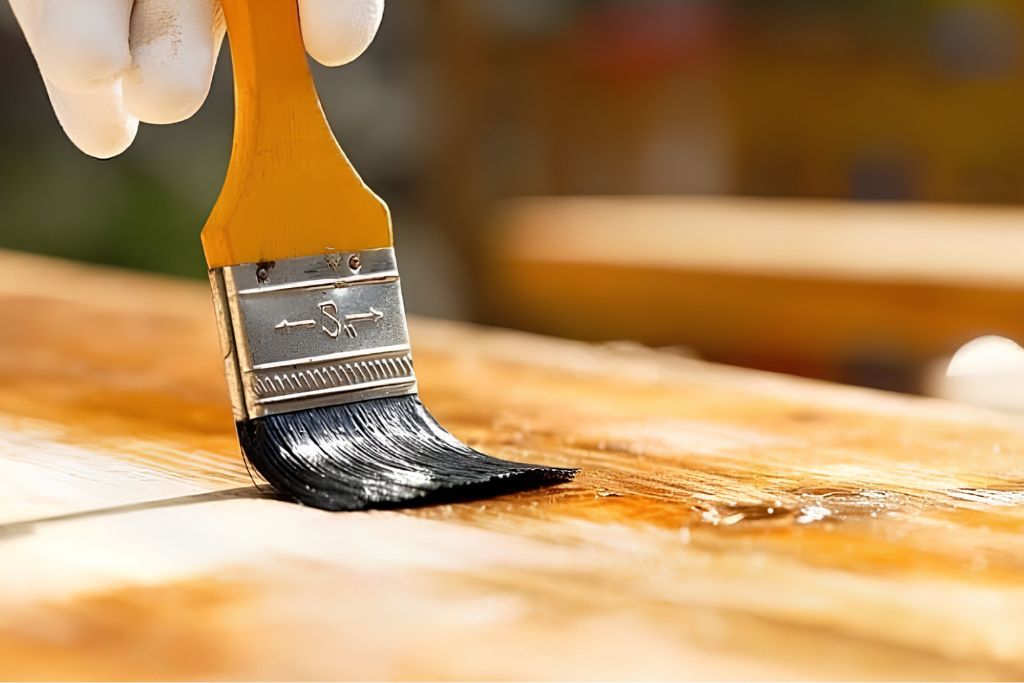
Yes. Paint holds on cured poly for years, and the pieces that peel almost always got the same two steps skipped.
Cured polyurethane is a hard, closed, glassy film. Paint needs something to bite into, and a gloss surface gives it nothing.
Dull the shine, then prime with a product built to grip it. Scuff sand or wipe on a deglosser, then lay down one coat of a bonding or shellac primer.
Latex straight onto gloss poly is the version that fails.
Table of Contents
- Why Paint Peels Off Polyurethane, And The Two Fixes
- How To Tell If Your Finish Is Oil Based Or Water Based Polyurethane
- The Best Primer To Use Over Polyurethane
- Can You Paint Over Polyurethane Without Sanding?
- How To Paint Over Polyurethane
- The Adhesion Test That Tells You It Actually Worked
- Which Paints Go Over Primed Polyurethane, And What Goes Over Poly Itself
- Floors, Failing Finishes, And When To Strip Instead
- Bottom Line
- FAQs
- What Primer Should I Use Over Polyurethane?
- Do I Have To Sand Before Painting Over Polyurethane?
- What Finish Can You Put Over Polyurethane?
- Can You Paint Over Wood That Has Polyurethane On It?
- Will Chalk Paint Stick To Polyurethane Without Sanding?
- How Long Should Fresh Polyurethane Cure Before You Paint Over It?
- References
Why Paint Peels Off Polyurethane, And The Two Fixes
Paint that looked flawless on day one can come off a cabinet door in sheets a few weeks later, the moment a fingernail catches an edge. The paint was fine. The bond was never there.
Cured polyurethane is a closed film with almost no texture in it. Cleaning and scuffing exist to create microscopic roughness for the new coat to key into, which is the whole game when you are painting over a polyurethane finish.
Skip both and the paint is sitting on that gloss like water on a waxed hood.
That is also the answer to the grit question. You are dulling the film, not removing it, so 180 to 220 grit is the range. Coarse grit cuts through, exposes bare wood, and leaves scratches that telegraph through the finished paint.
One thing worth knowing before you start: stained trim, doors and cabinets nearly always carry a clear topcoat, which means painting over stained wood is usually this same job under another name.
How To Tell If Your Finish Is Oil Based Or Water Based Polyurethane
Most people painting over poly have no idea which kind is sitting on the piece, and every primer recommendation they read quietly assumes they do. Two minutes and a cotton swab settles it.
Pick somewhere that will never show. A cabinet door edge or the underside of a tabletop.
Dab on a little acetone or xylene and rub for a few seconds. A water-based polyurethane softens and turns tacky, because those solvents attack the acrylic resin. A cured oil-based poly shrugs them off and stays hard.
Denatured alcohol rules out the impostor. If the finish goes gummy under alcohol it is shellac, not polyurethane, and it needs no bonding primer at all.
| Test | Water Based Polyurethane | Oil Based Polyurethane |
|---|---|---|
| Acetone or xylene on a hidden spot | Softens and gets tacky | Stays hard, no reaction |
| Denatured alcohol on a hidden spot | No change | No change (if it goes gummy, the finish is shellac) |
| Color after years | Stays clear | Ambers or yellows, obvious on maple and white oak |

A very clear, fast-drying water-based film may not be polyurethane at all, and the difference between polyurethane and polycrylic is worth two minutes if the piece is recent.
What you find changes what you buy. Oil-based poly is the harder, slicker film, so shellac or an oil primer earns its keep. Water-based films are where a water-based bonding primer is comfortable.
The Best Primer To Use Over Polyurethane
There are trim and cabinet paints on the shelf that advertise bonding straight to polyurethane with no primer underneath. Results are mixed in practice, which is why one crew converting basement trim reached for shellac primer rather than trust the bond-to-anything claim.
Four options, side by side. Volatile organic compounds (VOC) are listed in grams per liter.
| Primer Type | Grip On Gloss Poly | Dry And Recoat | Odor And VOC | Cleanup | When To Use It |
|---|---|---|---|---|---|
| Shellac Based (Zinsser B-I-N) | Strongest bond available to a homeowner, blocks tannins too | Fastest of the four, follow the can | Strong alcohol fumes, ventilate | Denatured alcohol | Old oil-based poly, knots, sanded-through spots, anything you cannot afford to redo |
| Oil Or Alkyd (Zinsser Cover-Stain) | Excellent, the label claims it sticks without sanding | Dry to touch in about 1 hour | Solvent odor | Mineral spirits | Trim and doors where you want stain blocking without shellac fumes |
| Water Based Bonding (KILZ Adhesion, Insl-X Stix, Bulls Eye 1-2-3) | Very good on clean, scuffed gloss | 30 min touch and 1 hr recoat for KILZ Adhesion, 3 to 4 hours to recoat Stix | Low odor, KILZ Adhesion is 100 g/L VOC | Soap and water | Interior work where fumes matter, kids or pets in the house |
| Standard Latex Or Wall Primer | Poor, this is the peeling story | Fast | Low | Soap and water | Not over polyurethane |
The hard numbers there come from KILZ Adhesion, which publishes a full spec sheet: 30 minutes to touch, 1 hour to recoat, 100 grams per liter VOC, 300 to 400 square feet per gallon.
Polyurethane is one of the surfaces where priming before painting is actually required, not optional.

Why Shellac Still Wins When You Cannot Afford A Redo
Shellac primer bonds to almost anything. It goes on very thin, closer to a loose paint, and once it is down a poly-coated surface behaves like ordinary primed wood.
The counterweight is cost and fumes. It is the most expensive primer on the shelf by a wide margin, and the alcohol smell wants windows open and a fan running. Treat it as insurance on a piece you cannot face redoing.
Tannins Come From The Wood, Not From The Polyurethane
Tannins live in the wood itself, and an intact polyurethane film generally seals them in. Bleed-through is only a live risk in three places: where you sanded through to bare wood, at knots, and anywhere the poly is already failing or water stained.
Spot prime those areas with shellac or an oil primer. A water-based primer can pull tannins out and make the bleed worse.
Can You Paint Over Polyurethane Without Sanding?
Yes. Swap the sandpaper for a chemical that does the same job to the surface.
Liquid deglosser, sold as liquid sandpaper in some aisles, wipes on with a rag and dulls the film chemically.
Read the can, because labels differ. Krud Kutter’s Gloss-Off label says wipe it on, wipe it off, and coat any time after it is dry to the touch, about 10 minutes.
Pick one rated for varnish and gloss, since some liquid sandpapers are meant for painted surfaces only.
The other route is a primer with a no-sand adhesion claim on the label. Painters demonstrating this online prime glossy varnished cupboard doors straight over the shine and get clean results.
Manufacturers put that claim in writing too. Zinsser’s Cover-Stain page says the oil primer sticks to all surfaces without sanding and dries to the touch in an hour.
Bare latex or a standard wall primer straight onto gloss poly does not work, and most peeling stories turn out to be exactly that.
Clean first either way, because grease and furniture polish beat any primer on the shelf.
How To Paint Over Polyurethane
The whole job is seven steps, and the two steps people skip are the two that decide whether it lasts.
1. Take The Hardware Off
Knobs, pulls, hinges, catches, all of it. Doors and drawer fronts come off too and get painted flat if you have anywhere to lay them.
2. Clean It Properly
No primer compensates for this one. Wipe with mineral spirits first to lift wax and furniture polish, then wash with a degreasing cleaner or a TSP substitute, rinse, and let it dry.
Kitchen cabinets and door edges carry years of hand oil and cooking film, so give those a second pass.
3. Scuff Until The Shine Is Gone
180 to 220 grit by hand, with the grain. Stop when the surface reads dull and even, not when you see bare wood. Spindles, carved detail and anything a sanding block cannot reach get the liquid deglosser instead.
4. Vacuum, Then Wipe With A Tack Cloth
Both, in that order. Sanding dust trapped under primer shows up as texture in the finished paint.
5. Prime
One coat, chosen from the table above. Give it the full recoat time rather than the touch-dry time, and how long primer takes to dry breaks that difference down by type. The KILZ Adhesion label also wants a topcoat within 30 days, or the primer itself can pick up contamination.
6. Two Thin Topcoats, Not One Heavy One
Scuff the primer lightly with 220 grit and clear the dust before coat one. Thin coats level better and cure harder. Hardware and doors go back on after the paint has had a few days, not after it is dry to the touch.
7. Test The Bond Before You Reassemble
One tape test on a hidden spot, covered in full below.
The Adhesion Test That Tells You It Actually Worked
Five minutes on a hidden corner now saves you finding out the expensive way later. Use a door you have not reinstalled.

Cut a small crosshatch through the cured coating down to the substrate with a utility knife. Press strong masking tape firmly over the cuts and rip it off in one motion. Little or nothing coming away means the bond is good, and chunks lifting means you stop.
Give it at least 24 hours before you test. A coating that is still soft can pass and then let go once it cures.
The no-knife version is a hard scratch at an edge with a key, closer to how a cabinet actually gets damaged. The KILZ Adhesion label tells you to test a small area first.
If the test fails, the fix is a different primer, not more coats of the same one. Sand the test patch back, wipe it clean, and switch to shellac.
Which Paints Go Over Primed Polyurethane, And What Goes Over Poly Itself
Put a polyurethane topcoat over your freshly painted trim and you have given up easy touch-ups forever.
A scuff can no longer be fixed with a dab of paint, because the paint now sits under the clear coat. Painters skip the poly on painted cabinets for exactly that reason.
Topcoat choice gets simpler once the primer is down, because the paint only has to stick to primer.
| Paint Over Primed Poly | Prep Needed | Durability | Notes |
|---|---|---|---|
| Latex Or Acrylic Enamel | Scuff plus bonding primer | Good on trim and low-touch furniture | The everyday default |
| Alkyd Or Oil Enamel | Scuff plus oil or shellac primer | Hard film, good on doors and handled edges | Slow dry, solvent cleanup, ambers over time |
| Waterborne Alkyd Hybrid (Benjamin Moore Advance) | Scuff plus primer, do not rely on the bond-to-anything claim alone | Furniture-grade, self leveling | Slow schedule, roughly 16 hour recoat and up to 30 days to full hardness |
| Waterborne Urethane Trim Enamel (Sherwin-Williams Emerald) | Scuff plus primer | Very hard, used by pros over shellac-primed poly | About 1 hour touch dry and a 4 hour recoat window, full cure usually 7 to 30 days |
| Chalk Paint | Still scuff to 220 despite the no-prep marketing | Soft, needs a wax or topcoat | Adhesion over slick poly is not what the marketing implies |
Latex or acrylic enamel holds fine on trim and furniture nobody grabs. Doors, drawer fronts and handled edges are where the harder alkyd and urethane enamels earn the extra hassle.
Watch the cure times in that table. Shelves stay empty and doors stay slightly ajar for longer than you expect with the hybrid enamels.
As for what goes over polyurethane itself, more polyurethane is fine after a scuff sand, and water-based poly will go over fully cured oil-based poly the same way.
Trouble starts when a hard, brittle clear coat sits on a paint that stays softer underneath, which is one reason a clear coat over floor enamel tends to chip.
Floors, Failing Finishes, And When To Strip Instead
Three situations flip the answer above, and floors are the one people get wrong.
A polyurethaned hardwood floor takes grit, chair legs and foot traffic that no cabinet door ever sees.
Ordinary trim paint scratches through in months, and once it flakes you are into a full sanding. KILZ Adhesion is not recommended for floors or horizontal surfaces with prolonged water contact.
The one real exception is a porch and floor enamel with full prep, on a floor you accept will be painted.
If the poly is already flaking, peeling or lifting at the edges, nothing on top will hold. The weak layer is underneath, and it comes off first with your new paint on it.
Stripping is the right call on anything failing over a large area. Taking the old finish back to bare wood is a sander job, and on open-grain oak expect the grain texture to show through paint either way unless you fill it first.
Bottom Line
Yes, paint holds over cured polyurethane, and it lasts when you clean the piece, dull the shine, and prime with something built to grip gloss.
The no-thinking version: clean off the grease, scuff with 180 to 220 grit until the shine is gone, one coat of a bonding or shellac primer, two thin topcoats, and a tape test on a hidden spot before you put anything back together.
Two decisions actually matter. Which primer, and whether you are sanding or deglossing.
If the finish is old ambered oil-based poly, or the piece is something you cannot face redoing, shellac primer takes the guesswork out. If fumes are the problem, a water-based bonding primer gets you most of the way there.
One hard no. Floors, and any finish that is already letting go. Those get refinished or stripped, not painted.
FAQs
What Primer Should I Use Over Polyurethane?
Shellac based gives the strongest bond and blocks tannins too, while oil or alkyd primer is the common professional default. Water-based bonding primers give comparable grip with low odor and soap and water cleanup. Standard latex wall primer is the one that fails.
Do I Have To Sand Before Painting Over Polyurethane?
No, not if you swap in a liquid deglosser or a primer carrying a no-sand adhesion claim on the label. Wipe the deglosser on and off, let it dry, then prime as normal. Going straight to latex over gloss poly is what peels.
What Finish Can You Put Over Polyurethane?
More polyurethane goes on fine after a scuff sand, and water-based poly will go over fully cured oil-based poly the same way. Paint works once the surface is primed. What fails is a hard clear coat stacked over a softer painted film.
Can You Paint Over Wood That Has Polyurethane On It?
Yes. Trim, doors, cabinets, furniture and paneling all take paint over cured poly once the surface is cleaned, dulled and primed. Floors are the exception, since a painted and clear coated floor chips under foot traffic and usually gets refinished instead.
Will Chalk Paint Stick To Polyurethane Without Sanding?
It grips better than regular latex, but the no-prep marketing overstates things on a genuinely glossy poly film. A light 220 grit scuff first is what makes it last on anything that gets handled, and it still needs wax or a topcoat.
How Long Should Fresh Polyurethane Cure Before You Paint Over It?
Until it is fully cured, not just dry to the touch. The workshop tell is sandpaper: cured poly sands to a dry white powder, while uncured poly gums up the grit. Water-based gets there in days, oil-based can take weeks in a cool room.
References
- Converting Stained Wood Trim To Painted Wood Trim (Paint Your Home Now). Mixed results from hybrid trim paints that claim to bond to poly, and the shellac primer step used instead.
- KILZ Adhesion Primer (KILZ). Dry and recoat times, VOC, coverage, the 30 day topcoat window, the small-area test guidance, and the note against floors and horizontal wet surfaces.
- Zinsser Cover-Stain Oil-Base Primer (Rust-Oleum). The adhesion-without-sanding claim and the 1 hour dry-to-touch figure.
- Krud Kutter Gloss-Off Pre-paint Surface Preparation (Rust-Oleum product support). Directions for the liquid deglosser: wipe on, wipe off, coat any time after it is dry to the touch, about 10 minutes.